








Jaden Newman’s reported account-compromise controversy is drawing attention to the limits of the new federal law designed to combat the non-consensual distribution of intimate images and AI-generated sexual content.
The reported incident involving basketball player and digital creator Jaden Newman has brought renewed attention to the United States’ newly operational TAKE IT DOWN Act, particularly the gap between removing harmful material from major social platforms and stopping its circulation across the wider internet.
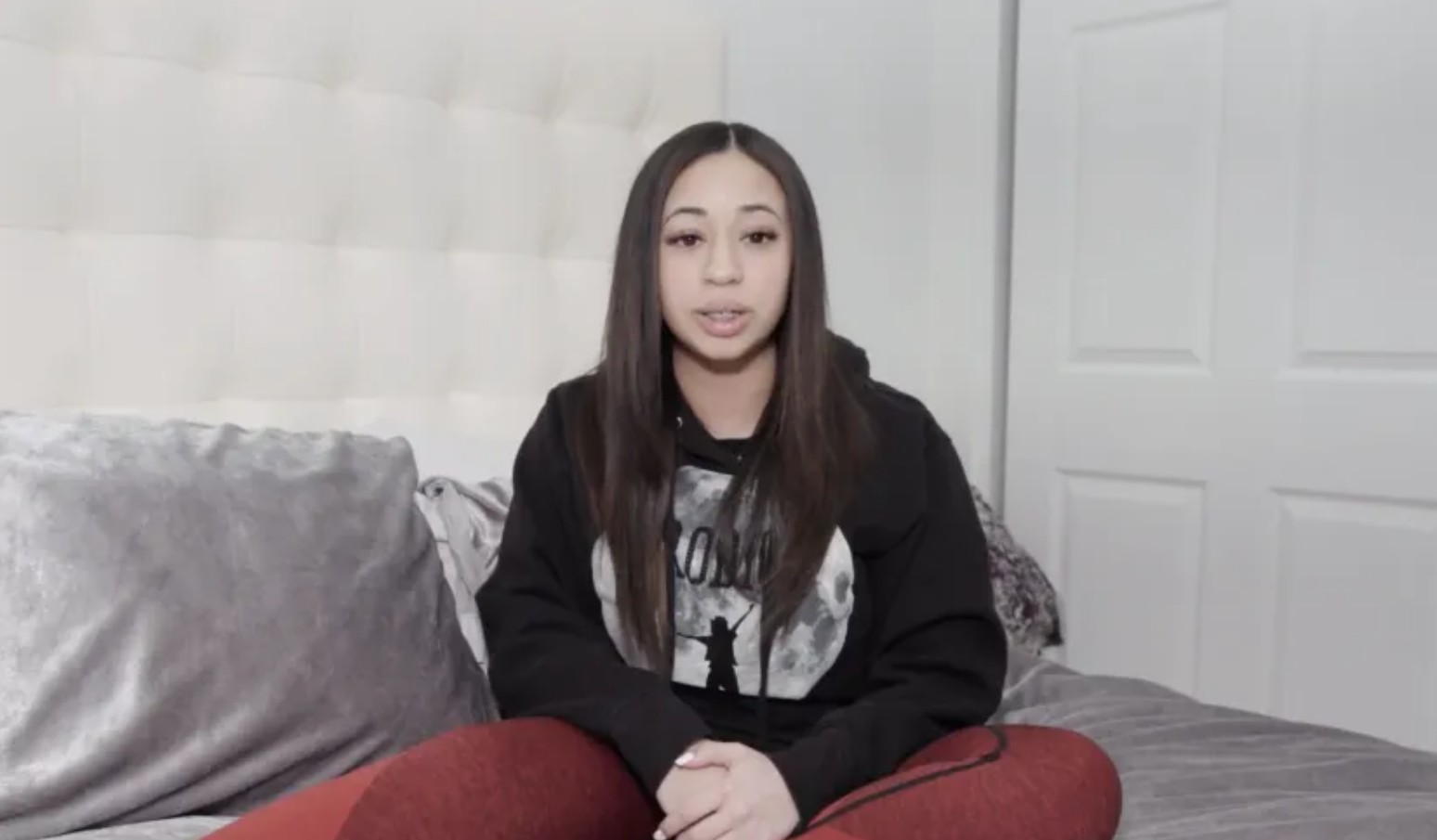
Newman, who became publicly known as a young basketball talent and later built a substantial online following, reportedly addressed the situation during a livestream after intimate material allegedly linked to her began circulating online. Her brother Julian Newman subsequently discussed the situation publicly in a video.
The case has attracted attention not simply because of Newman’s public profile, but because it illustrates a difficult question facing victims of non-consensual intimate imagery: What happens after content is removed from a major platform but continues circulating elsewhere?
What happened to Jaden Newman?
According to publicly circulated reports and statements attributed to Newman, material allegedly involving her began appearing online in early August 2026 following what she described as a hacking incident.
During a livestream, Newman reportedly acknowledged the situation while asking viewers and moderators to stop repeatedly raising the subject.
Her brother Julian later addressed the controversy in a video, saying that the situation was not her fault. His comments also generated discussion online.
It is important to distinguish between what Newman has publicly said about an alleged account compromise and claims about the origin or authenticity of material circulating online. The circulation of purported intimate material should not itself be treated as proof that every version or copy is authentic.
The episode has nevertheless become a prominent example of the challenges faced by people whose private material is allegedly distributed without permission.
Why the TAKE IT DOWN Act matters
The TAKE IT DOWN Act represents one of the most significant changes in US federal policy concerning non-consensual intimate imagery.
The legislation was signed into federal law in May 2025. Its criminal provisions took effect earlier, while the platform-removal provisions became enforceable in May 2026.
Under the federal framework, covered platforms must establish a process through which people can request the removal of qualifying non-consensual intimate imagery, including certain digitally altered or AI-generated material.
Once a valid request is received, the platform generally has 48 hours to remove the reported material and take reasonable steps concerning known identical copies.
That requirement is particularly important because victims previously had to rely heavily on individual platform policies, copyright mechanisms, privacy procedures and other legal remedies that could vary considerably from one service to another.
The 48-hour rule is powerful — but limited
The headline feature of the law is its 48-hour removal requirement.
But removal from one website does not necessarily mean that the material disappears from the internet.
A piece of content can be copied, downloaded, altered and uploaded to another service before the original platform has completed its review. It can also move between social networks, forums, private communities and websites operating in different jurisdictions.
This creates a fundamental limitation.
The TAKE IT DOWN Act can impose obligations on covered platforms within its legal scope, but it cannot magically erase every copy of material from every corner of the global internet.
That distinction is crucial when assessing cases such as the one involving Newman.
Why copies can continue circulating
Digital content is unusually difficult to contain once it has been downloaded.
A single upload can potentially generate multiple copies. Those copies can then be renamed, cropped, compressed or otherwise modified.
Hash-based detection systems can help identify known material, but substantially modified versions can be harder for automated systems to recognize.
The problem becomes even more complicated when content moves into private communications or services that operate outside US jurisdiction.
As a result, a successful takedown on Instagram, X, TikTok or another major service does not necessarily guarantee that the same material will disappear everywhere else.
The law also covers AI-generated intimate imagery
One of the more consequential elements of the legislation is its treatment of digitally manipulated content.
The law is not limited to conventional photographs or videos. It also addresses qualifying digital forgeries depicting identifiable individuals in intimate circumstances without their consent.
That distinction has become increasingly important as generative-AI technology makes it easier to create convincing fabricated images and videos.
For victims, the practical problem can be especially severe: even when material is fabricated, viewers may believe it is authentic, while copies can continue spreading long after the original post has been removed.
The legal response therefore increasingly focuses on non-consensual distribution itself, rather than simply asking whether an image or video is genuine.
What platforms are expected to do
A person seeking removal under the federal process generally needs to submit information allowing the platform to identify the material and provide the required representations and contact information.
The law places responsibility on covered platforms to maintain a clear and accessible process for receiving these requests.
Where a platform fails to meet its obligations, the Federal Trade Commission can pursue enforcement.
The FTC has also issued compliance guidance and warned companies about their responsibilities under the new law.
For victims, that creates a significant difference from relying solely on voluntary moderation systems.
Why offshore websites remain a difficult problem
The internet does not operate according to a single national jurisdiction.
A website hosting or redistributing harmful material may be based outside the United States or structured in a way that makes US enforcement more difficult.
Even where American law provides a strong remedy against a major social-media company, that remedy does not automatically extend to every independent website that later republishes the same material.
This creates what could become one of the defining challenges for the TAKE IT DOWN Act: the law can increase accountability at important distribution points, but it cannot control the entire global content ecosystem.
That does not make the law ineffective. It means its success needs to be measured realistically.
Private messaging creates another challenge
Private and encrypted communications present a separate issue.
Material can be redistributed through private groups and direct messages, making it much harder for a platform to identify every copy without raising significant privacy and encryption concerns.
Digital-rights organizations have previously raised questions about how removal obligations should interact with encrypted communications.
The result is a difficult balance between protecting victims from abuse and maintaining legitimate privacy protections for users.
What the Jaden Newman case could show
If the reported Newman incident continues to develop, it could become an important public example of how the new federal framework works in practice.
The key question is not simply whether major platforms remove reported material.
It is whether the broader ecosystem can prevent the material from being repeatedly uploaded elsewhere.
That distinction matters because modern online abuse often follows a predictable pattern: an account is compromised or private material is obtained, the content is initially posted to a large platform, copies are created rapidly, and redistribution then moves across multiple services.
A 48-hour deadline can provide victims with a meaningful mechanism for responding to the first wave. It cannot by itself guarantee that the second, third or fourth waves never occur.
What victims should know
Anyone affected by the non-consensual distribution of intimate imagery should avoid further spreading the material while attempting to document where it has appeared.
Useful information can include URLs, usernames, dates, platform names and screenshots showing the location of the content, provided that collecting such evidence does not require downloading or redistributing the intimate material itself.
Victims can also use the reporting and removal mechanisms provided by individual platforms and consult qualified legal or victim-support organizations for advice appropriate to their circumstances.
Where federal enforcement may be relevant, information about the TAKE IT DOWN Act and FTC resources can provide an additional avenue.
The bigger issue is larger than one celebrity case
Jaden Newman’s reported experience is part of a broader debate about privacy, cybersecurity, platform responsibility and the rapid development of artificial intelligence.
The same social-media infrastructure that allows athletes and creators to build global audiences can also allow harmful material to spread at extraordinary speed.
That creates a fundamental challenge for lawmakers and technology companies: how do you give victims an effective remedy when digital distribution is global, instantaneous and highly replicable?
The TAKE IT DOWN Act is an attempt to answer part of that question.
Its 48-hour removal requirement gives victims a clearer federal mechanism than they previously had. But the law’s real effectiveness will ultimately depend on enforcement, platform cooperation, detection technology and the ability to address redistribution beyond the largest US-based services.
For now, the Newman controversy offers a timely reminder that removing the first upload and stopping the internet from reproducing it are two very different problems.
IndyaStory will continue to follow developments concerning the case, the TAKE IT DOWN Act and the wider debate surrounding online privacy and non-consensual intimate imagery.
Editorial note
The claims concerning Jaden Newman in this article are described as allegations or reported statements where independent verification is unavailable. IndyaStory does not publish or link to purported intimate material. Readers should avoid downloading, sharing or redistributing such material.
Frequently Asked Questions
What is the TAKE IT DOWN Act?
The TAKE IT DOWN Act is US federal legislation addressing the non-consensual publication of intimate imagery, including qualifying digitally manipulated or AI-generated intimate content.
Does the law require platforms to remove content within 48 hours?
For qualifying material and valid removal requests covered by the statute, covered platforms are required to remove the reported content within the applicable 48-hour period and make reasonable efforts concerning known identical copies.
Does the law remove content from the entire internet?
No. The law primarily creates obligations for platforms that fall within its statutory definition. It cannot automatically remove copies from every website, private communication channel or foreign service.
Does the TAKE IT DOWN Act cover AI-generated material?
Yes. The legislation includes qualifying digital forgeries depicting identifiable individuals in intimate circumstances without consent.
What should someone do if intimate material is shared without consent?
The person should avoid further distributing the material, preserve relevant information such as URLs and account details where safe to do so, use the affected platform’s reporting/removal process and consider obtaining legal or victim-support assistance.
Is every video or image claimed to involve a public figure authentic?
No. Online claims about purported intimate material can be inaccurate, manipulated or completely fabricated. A person’s name being attached to material does not establish authenticity.