






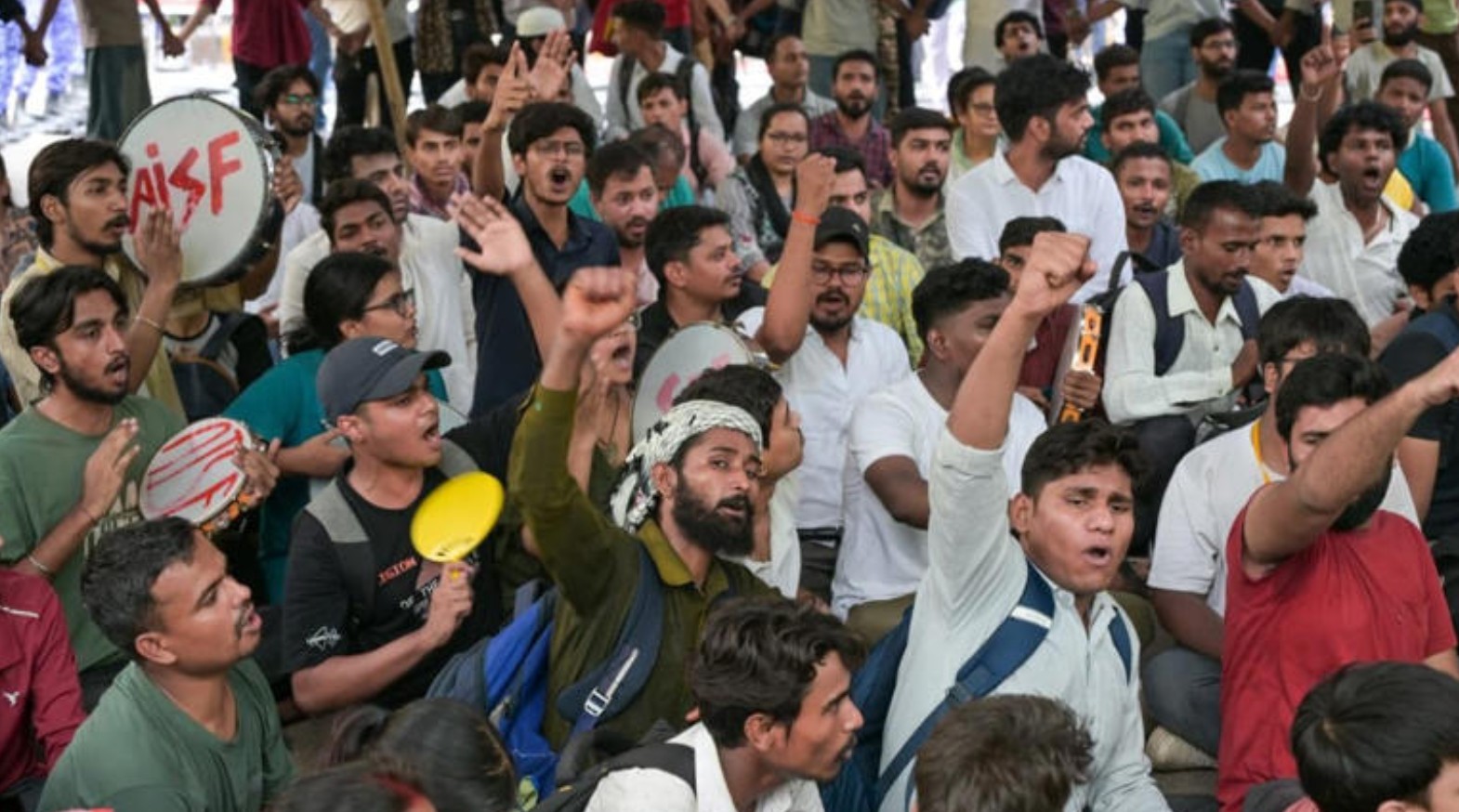
New Delhi: A day after a protest march organized by the Cockroach Janta Party (CJP) turned tense in parts of the national capital, a separate battle unfolded online as social media users debated the nature of the movement, its leadership, and its growing public support.
Several posts circulating on X attracted attention after users made comments linking the movement to caste identity and Ambedkarite politics. The posts generated strong reactions, with supporters of the protest accusing critics of attempting to divert attention from the issues being raised by students and young people.
Online Narratives Emerge After Street Demonstrations
The protest movement, which has focused on concerns surrounding examination integrity, student welfare, and accountability, drew thousands of participants to Delhi. Following clashes and confrontations reported during the demonstrations, discussion quickly shifted to social media platforms.
A number of accounts questioned the ideological foundations of the movement, while others argued that attempts to frame the protests through a caste lens were designed to undermine broader public support.
The debate quickly gained traction, generating thousands of interactions and sparking discussions among academics, activists, students, and political observers.
Critics Raise Concerns Over Caste-Based Commentary
Some social media posts characterized the movement as being closely associated with Ambedkarite thought and warned certain social groups against supporting it. These remarks drew criticism from commentators who argued that reducing a large public movement to caste identity oversimplifies the issues being raised by participants.
Observers noted that the protests have attracted support from people across different social and economic backgrounds, including students, educators, public figures, and civil society groups.
Several users also challenged claims that the demonstrations represented only a particular community, arguing that concerns over examinations, employment, and educational opportunities affect a much wider section of society.
Academics and Commentators Respond
Speaking to media outlets, some scholars and public commentators suggested that the controversy reflects a broader struggle over how public movements are portrayed online.
According to these observers, discussions centered on caste identity can sometimes overshadow debates about policy, governance, and institutional accountability. They argued that attention should remain focused on the issues that initially brought protesters to the streets.
Others maintained that democratic movements often attract participants from diverse backgrounds and that attempts to narrowly define them risk misrepresenting their objectives.
Growing Influence of Social Media
The episode once again highlighted the growing influence of social media platforms in shaping public perception during major political and social events.
Within hours of the protest, videos, opinion posts, and commentary circulated widely across platforms, creating competing narratives about the movement. While supporters emphasized student concerns and calls for accountability, critics questioned the motivations and ideological foundations of the campaign.
Media analysts note that such digital battles increasingly play a significant role in determining how public movements are understood by wider audiences.
Larger Questions Remain
Despite the online controversy, the central issues raised by protesters continue to dominate discussions among students and educational stakeholders. Concerns regarding examination systems, transparency, and opportunities for young people remain at the heart of the debate.
Supporters argue that public attention should stay focused on these substantive issues rather than on identity-based arguments circulating online. Critics, meanwhile, continue to scrutinize the movement’s leadership and political direction.
As discussions continue both on the streets and across digital platforms, the controversy underscores how modern protest movements are shaped not only by events on the ground but also by the narratives that emerge online.
Editorial Note: This report summarizes publicly reported reactions, statements, and social media discussions. Allegations, opinions, and claims mentioned by individuals or online accounts should be understood as attributed statements and not independently verified facts.