






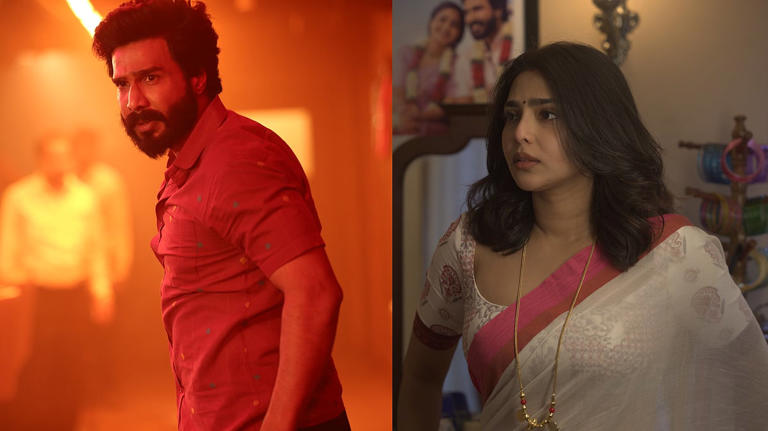
Three years after winning audiences with its blend of comedy and social messaging, Gatta Kusthi returns with a sequel that expands the story of Veera and Keerthy. Director Chella Ayyavu once again places gender roles, marriage and family expectations at the center of the narrative, but this time the film takes a bolder and often more divisive approach.
Set several years after the events of the first film, Gatta Kusthi 2 follows Veera (Vishnuu Vishal), now a proud homemaker, and Keerthy (Aishwarya Lekshmi), whose wrestling career continues to flourish. Their daughter Mathi adds a fresh dynamic to the story, while family tensions and misunderstandings create the foundation for much of the film’s comedy and drama.
One of the sequel’s biggest strengths is its willingness to challenge traditional ideas about masculinity. Veera embraces domestic responsibilities without embarrassment, and the film repeatedly highlights the value of unpaid household work. Some of the most effective scenes explore how society still judges men who choose caregiving roles, while simultaneously failing to appreciate the labour performed by countless women at home.
Vishnuu Vishal carries the film with ease. His comic timing remains one of his strongest assets, and he brings warmth to a character who is often caught between sincerity and immaturity. Many of the film’s funniest moments come directly from his interactions with neighbours, family members and his daughter.
The screenplay is packed with crowd-pleasing humour. Several extended comedic sequences land successfully, helping maintain an upbeat pace even when the story ventures into familiar territory. The film also does a commendable job of bringing new viewers up to speed on events from the first installment without slowing the narrative.
However, Gatta Kusthi 2 is far from flawless.
While the film promotes progressive ideas in some moments, it falls back on outdated storytelling devices in others. Certain conflicts feel exaggerated, and some supporting characters are written with limited depth. The handling of relationship tensions occasionally lacks nuance, making important emotional moments feel less impactful than they should.
Aishwarya Lekshmi delivers a committed performance, but her character often feels underdeveloped compared to Veera. Keerthy’s frustrations and emotional struggles are introduced but not always explored with the depth they deserve. As a result, the film sometimes appears more interested in defending one perspective than fully examining both sides of the conflict.
The second half introduces additional subplots that generate laughs but occasionally stretch credibility. Some character decisions may leave viewers questioning the logic behind them, particularly in situations designed primarily to create confusion or comedy.
The standout surprise is young Zara as Mathi. Her performance feels natural and believable, adding genuine charm to the family dynamic. The film wisely allows the child character to behave like a child rather than using her as a vehicle for forced maturity.
Technically, the film remains polished. The vibrant visuals, energetic background score and lively pacing help maintain audience engagement throughout its runtime. Cameo appearances and supporting performances add extra entertainment value, even if a few sequences linger longer than necessary.
Ultimately, Gatta Kusthi 2 succeeds best as a commercial family entertainer. It offers plenty of humour, relatable domestic situations and energetic performances. At the same time, its messaging can feel inconsistent, especially when addressing complex themes surrounding marriage, respect and gender expectations.
For viewers seeking a light-hearted comedy with emotional moments and strong performances, Gatta Kusthi 2 delivers enough entertainment to justify the ride. Those looking for a more balanced exploration of its social themes may find themselves enjoying the laughs while still questioning some of the film’s choices.
Rating: 3.5/5
Gatta Kusthi 2 is an engaging crowd-pleaser that mixes humour and heart effectively, even if its social commentary occasionally sends mixed signals.